By focusing our efforts on key
research areas, we ensure that
scientific discover y leads to
tangible solutions for global
challenges.
Insights driving
transformation.


-
RESEARCH CORES
Health for the people
Health for the people
The Health Research Core improves human well-being through biotechnology, nanotechnology, informatics, and electronics, developing preventive solutions, innovative diagnostics, treatments, and technologies for physical and mental health.
It also addresses food security by strengthening the production, conservation, and consumption of nutritious foods to reduce malnutrition and improve public health. Through basic and applied science, the hub advances bioengineering, biopharmaceuticals, smart nutrition, and the design of safer, higher-quality foods and medical devices.

Flaghsip Projects
Flagship Projects

These flagship health projects showcase how interdisciplinary research turns scientific knowledge into real-world solutions that improve prevention, diagnosis and overall well-being for communities.
Focused on biotechnology, nutrition, data and medical devices, these initiatives address pressing health challenges through innovation and collaboration. They integrate applied research, technological development and human-centered design to create scalable solutions that strengthen healthcare systems and positively impact quality of life.
Food Security
and Nutrition
Focus on malnutrition in Mexico
and globally.
Multidisciplinary research to promote
sustainable food systems, improve
nutrition, and strengthen food security.
Aging and Longevity
Aging population reaches 22%
by 2050.
Applying engineering to address
physical and mental problems
associated with aging.
Research professors
Research professors advancing people’s well-being
Our Health researchers focus on generating knowledge and solutions that directly improve people’s quality of life, addressing real-world challenges in prevention, diagnosis, treatment, and well-being.
Guided by a people-centered approach, their work integrates engineering, biotechnology, informatics, and health sciences to develop accessible, ethical, and innovative solutions. From new therapies and medical technologies to nutrition and mental health strategies, their research seeks to create lasting, positive impact in individuals, families, and communities.




Latest Publications
Our Latest
Findings
Dual process to recover essential oil and pectin from citrus waste
Dual process to recover essential oil and pectin from citrus waste
Jorge Welti, Oscar Hernández, Mariana Morales, Eduardo Bárzana
Citrus waste from the juice industry contains valuable essential oils and pectin. This study presents a novel, sustainable recovery method using pulsed electric fields and reactive extrusion to valorize orange by-products in Mexico.
Beta-Dystroglycan Analysis in Senescent Cell Models
Beta-Dystroglycan Analysis in Senescent Cell Models
International Journal of Molecular Sciences
β-dystroglycan localizes mainly in the nucleus of senescent cells. Altered processing and mislocalization were found in aged, NaBu-treated, and HGPS fibroblasts, suggesting its involvement in genomic instability and cellular senescence.
Upcycling agave and tortilla waste to produce edible fungi
Upcycling agave and tortilla waste to produce edible fungi
Future Foods
Agave bagasse and tortilla wastewater were combined in a sustainable process that enhanced lignin removal, increased sugars and fiber, reduced antinutrients, and enabled edible mushroom production, supporting circular economy applications.
Lead in Mexican Lead-Glazed Ceramics: Detection, Levels, and Food Leaching
Lead in Mexican Lead-Glazed Ceramics: Detection, Levels, and Food Leaching
MDPI Processes
In Mexico, lead exposure mainly comes from lead-glazed ceramics. This study tested three curing methods and found they do not remove lead; in fact, they increased its concentration and leaching into food, raising serious health risks.
Collaborative mini 3D robot printer for complex food with multiple inks on curved surfaces
Collaborative mini 3D robot printer for complex food with multiple inks on curved surfaces
MDPI Micromachines
A fully automated collaborative 3D food printer using multiple inks and controlled motion creates complex edible structures with different materials and rheological properties, enabling the development of synthetic tissues and meat-like foods.
Economic evaluation of Colletotrichum biocontrol at large scale
Economic evaluation of Colletotrichum biocontrol at large scale
Journal of Chemical Technology and Biotechnology
Anthracnose is a fungal disease caused by Colletotrichum species, mainly affecting fruits in tropical and subtropical regions. It causes severe postharvest losses of up to 80% in crops like banana, mango, avocado and strawberry.
Climate & Sustainability
Climate & Sustainability
This Research Core addresses environmental challenges by advancing sustainable practices focused on climate action, clean energy, water security, biodiversity, and circular economy solutions.
Through interdisciplinary collaboration, researchers develop innovative technologies, strategies, and policies to support climate resilience, environmental preservation, and social equity. Their work integrates science and engineering to accelerate the transition toward more sustainable systems that protect ecosystems and strengthen communities for future generations.
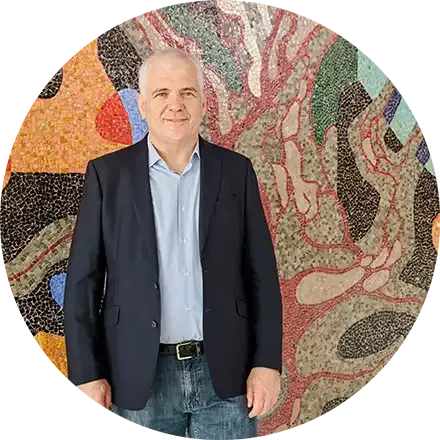
Flagship Projects
Flagship Projects

The flagship projects in Climate and Sustainability address urgent environmental challenges through interdisciplinary research focused on resilience, mitigation, and long-term ecological balance.
These initiatives bring together expertise in climate science, water and energy systems, biodiversity, circular economy, and sustainable policy. By combining technology, data, and social impact approaches, the projects generate scalable solutions that support ecosystems, strengthen community resilience, and contribute to a more sustainable and equitable future.
Sustainable Energy
Sustainable Energy.
Advanced tech for clean, efficient energy and lower emissions.
Water 360º
Solutions for water scarcity & climate.
A circular wastewater approach for sustainable water, climate and food security.
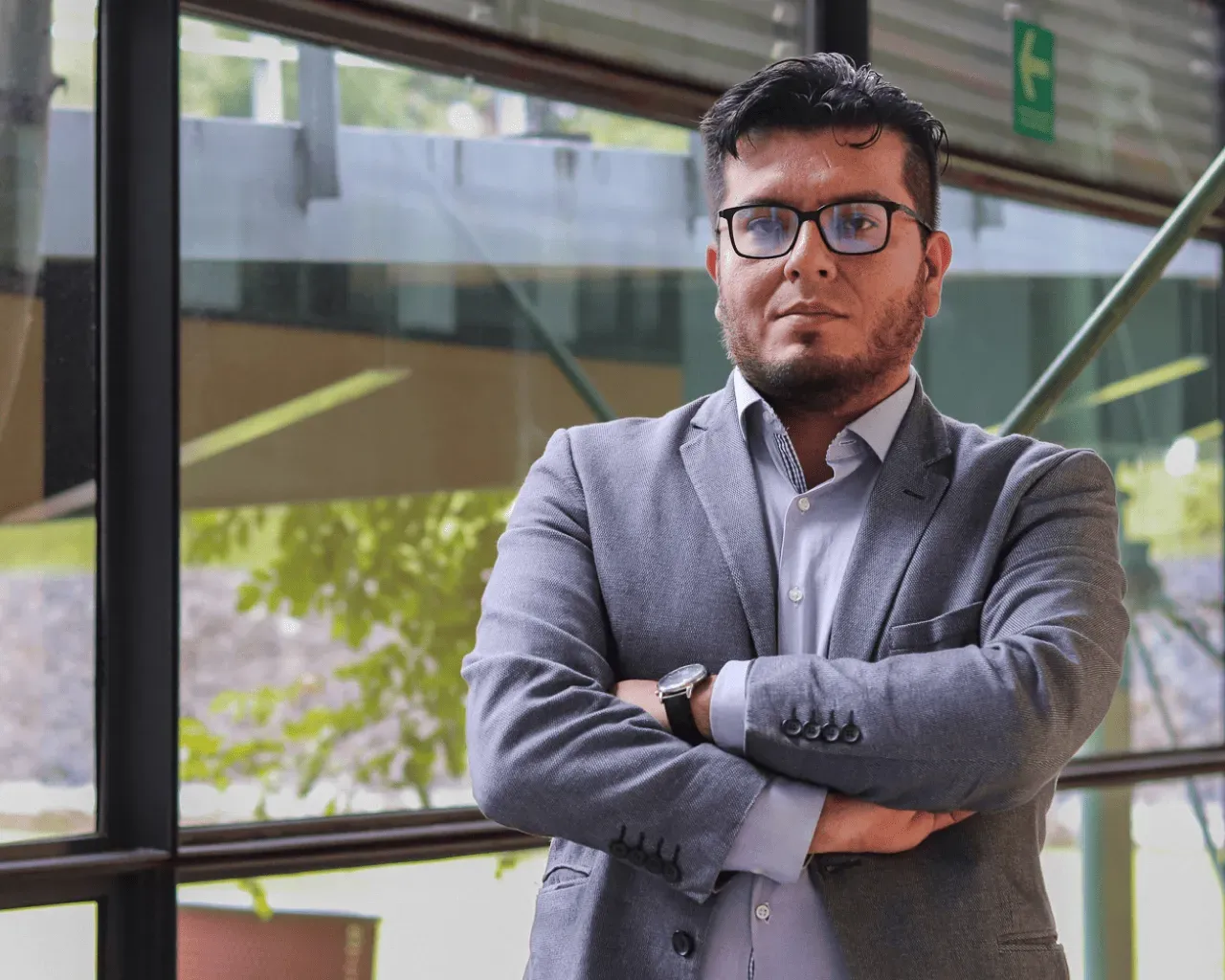
Research Professors
Contributing Faculty for Climate & Sustainability
The Climate and Sustainability research faculty advances interdisciplinary knowledge to tackle climate change, protect ecosystems, and promote responsible use of natural resources.
Through applied research and collaboration with industry, government, and communities, these professors develop strategies, technologies, and policies that support resilient cities, sustainable energy systems, water security, biodiversity conservation, and circular economy models. Their work strengthens climate action and contributes to building an equitable and sustainable future.
Latest Publications
Our Latest
Findings

Single-nanoplastic detection using plasmon-coupled scattering microscopy
Single-nanoplastic detection using plasmon-coupled scattering microscopy
Sensors and Actuators A: Physical
Plasmon-Coupled Scattering Microscopy (PCSM) enables high-sensitivity detection of individual nanoplastics (1–2500 nm) in water. Validated with polystyrene particles and theoretical modeling, it shows strong potential for future environmental monitoring.
Real Energy Efficiency of Road Vehicles
Real Energy Efficiency of Road Vehicles
MDPI Energies
A method to evaluate real vehicle energy efficiency is proposed by monitoring at 1 Hz RPM, location, speed, payload, and consumption. It was validated on 49 vehicles (gasoline, diesel, electric) across countries and altitudes.
3D Turbulence Model Sensitivity in Extreme River Conditions
3D Turbulence Model Sensitivity in Extreme River Conditions
MDPI Hydrology
This study compares five enhanced 3D turbulence models in extreme river conditions using ANSYS Fluent. Applied to the Santa Catarina River (Mexico), models showed similar mean velocity but differences in turbulence, anisotropy, and low-flow zone resolution.
3D Turbulence Model Sensitivity in Extreme River Conditions
3D Turbulence Model Sensitivity in Extreme River Conditions
MDPI Hydrology
This study compares five enhanced 3D turbulence models in extreme river conditions using ANSYS Fluent. Applied to the Santa Catarina River (Mexico), models showed similar mean velocity but differences in turbulence, anisotropy, and low-flow zone resolution.
3D numerical forecasting of Santa Catarina River under storm-driven abnormal discharge
3D numerical forecasting of Santa Catarina River under storm-driven abnormal discharge
Results in Engineering
High-fidelity 3D RANS simulations of the Santa Catarina River during Tropical Storm Alberto compared four turbulence models. The realizable k–ε best captured viscosity at moderate–high turbulence, matching video-based velocities up to 8.66 m/s.
3D numerical forecasting of Santa Catarina River under storm-driven abnormal discharge
3D numerical forecasting of Santa Catarina River under storm-driven abnormal discharge
Results in Engineering
High-fidelity 3D RANS simulations of the Santa Catarina River during Tropical Storm Alberto compared four turbulence models. The realizable k–ε best captured viscosity at moderate–high turbulence, matching video-based velocities up to 8.66 m/s.
Industrial Transformation
Industrial Transformation for Prosperity
The Industrial Transformation Research Core drives a prosperous future through multidisciplinary research and technology transfer focused on innovation and advanced industrial systems.
This transformation is powered by expertise in design, cyber-physical systems, semiconductors, artificial intelligence, sustainability, and human-centric technologies. By integrating science and innovation, researchers enable more efficient, resilient, and competitive industries that support long-term prosperity.
Flagship projects
Flagship projects
Industrial Transformation flagship projects focus on redefining the future of industry through research, innovation and applied technologies that strengthen competitiveness, sustainability and human-centered development.
These initiatives bring together experts in artificial intelligence, advanced manufacturing, semiconductors, cyber-physical systems and sustainable design to create scalable solutions for real-world challenges. Through collaboration with industry, government and international partners, the projects accelerate technology transfer, boost productivity and drive inclusive and resilient economic growth.
Mobility
Smart, safe and sustainable public transportation.
Electrification, autonomy, connectivity and advanced manufacturing for mobility.
Industry 5.0
Supporting green and digital manufacturing in LATAM.
Smart retrofitting and connected workforce boost efficiency & innovation.
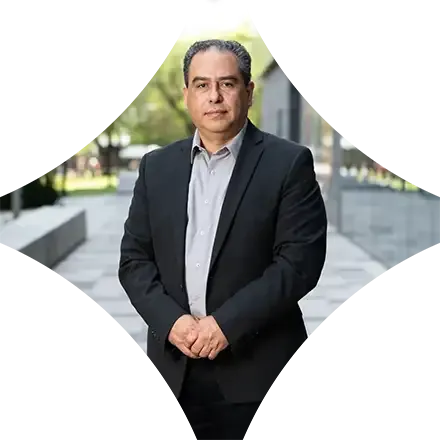
Research Professors
Faculty driving industrial transformation
Our faculty contributes to redefining industrial systems through multidisciplinary research that integrates advanced technologies, design, data, and human-centered approaches to create smarter, more sustainable industrial solutions.
They collaborate across engineering, science and industry to develop and transfer technologies in areas such as AI, cyber-physical systems, semiconductors, additive manufacturing, automation and sustainable production. Their work strengthens industrial resilience and accelerates innovation, bridging academic research with real-world transformation for economic and social impact.
Latest Publications
Our Latest
Findings
Advanced oil structurants via electrospun lignin/CAB nanofibers with TiO₂ coating
Advanced oil structurants via electrospun lignin/CAB nanofibers with TiO₂ coating
Wiley Online Library
Electrospun AKL/CAB nanofibers were used as renewable oil structurants. Above a critical concentration they formed stable gels in castor oil. TiO₂ coating via ALD reduced friction by 41% and prevented wear, improving lubricant performance.
Electrospun PLA nanofibers for coronary stents: effects of solution and process
Electrospun PLA nanofibers for coronary stents: effects of solution and process
Wiley Online Library
Electrospinning was used to deposit PLA nanofibers on coronary stents. High MW PLA in chloroform:acetone (2:1) produced bead-free fibers. Optimal conditions yielded uniform fibers of ~491–817 nm on flat and stent surfaces.
PLA Electrospun Coating for Controlled Degradation of WE43 Magnesium Stents
PLA Electrospun Coating for Controlled Degradation of WE43 Magnesium Stents
MDPI Polymers
PLA nanofibers were electrospun on WE43 Mg stents to reduce corrosion. Coated stents showed less damage, lower Mg release, and a reduced corrosion rate (0.216 mm/yr vs 0.312) after 14 days, with confirmed biocompatibility.