Explore our academic programs, departments, faculty, key figures, and organizational structure, designed to support learning, collaboration, and the continuous development of our community.
Finding the way through knowledge, research and innovation.


Our Numbers
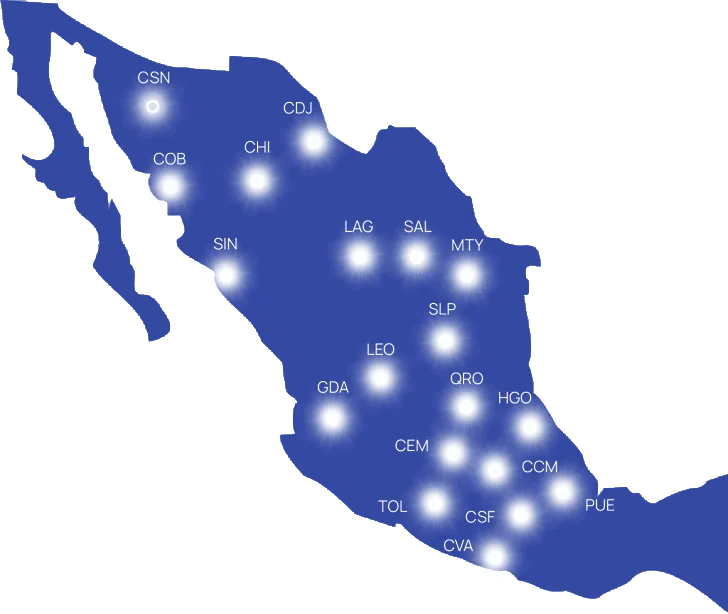
Presence in 19 cities

Students
| Undergraduate | Graduate | |
|---|---|---|
|
20,305
40% of the total of
students at Tec
|
3,437
50.6% of the total of
students at Tec
|
|
|
31.9%
Women Undergraduate Students
|
37.2%
Women Graduate Students
|
Professors
| Full Time | Part Time | |
|---|---|---|
|
893
|
1,742
|
|
|
25%
Women Professors
|
12%
Foreign Professors
|
Programs
Undergraduate 18
Graduate 13
PhD’s 4
Academics
Academic
Programs
Engineering for people, for the planet, and for prosperity.
At the School of Engineering and Sciences, we combine entrepreneurship with the richness of Latin American talent to push the boundaries of research. Our research hubs and strategic initiatives drive disruptive innovation, generating solutions that transcend borders and transform realities.
IE
Electronics and
Semiconductors
Engineering
It all started with a chip
Electronics power our future—cars, phones, robots, and more. A B.S. in Electronics Engineering trains you to design the tech of tomorrow, where semiconductors are key to innovation, smarter products, and a better quality of life.
IQ
Chemical
Engineering
Action-reaction: that’s the formula
Chemical processes are everywhere—even if we don’t see them. A B.S. in Chemical Engineering prepares you to design and improve the processes behind the materials used in making most of the products we rely on every day.
See all our programs
Our Ph.D program in Computer Science is research-oriented and integrated with the Master in Computer Science. It is focused in four lines of investigation, namely: bio-inspired algorithms, models of machine learning, bioinformatics and biomedicine, and data science and applied mathematics. Our program is strongly supported by the activity carried out within four Strategic Research Focus Group (SRFG): Intelligent Systems, Bioinformatics, Machine Learning Models, and Optimization and Data Science
Research and Innovation of manufacturing processes and products require scientists and technologists capable of solving complex problems, and of proposing disruptive solutions in different areas of knowledge. While studying the Master of Science in Manufacturing Systems, students will participate in inspiring projects that provide them with the skills to successfully meet these and other next-generation manufacturing challenges, in fields such as Industry 4.0, Nanotechnology, Bioengineering and Industries such as Automotive and Aerospace.
Innovation is a determining capacity for companies that are in constant competition to attract more customers, delivering products and services with high value added. In the absence of innovations, companies could lag behind in increasingly dynamic and competitive business environments. Innovation confers advantages to companies that seek to maintain a high level of performance in current and emerging industries, in a context in which the technological revolution has placed us on the threshold of a new era, that of Industry 4.0 and the consequent transformation that will imply for organizations.
The Master in Innovation for Business Development (MID) develops skills to propose original ideas and projects, applying appropriate techniques and methodologies, to develop innovative solutions and ventures with high value added. It also develops the skills of these professionals to manage the mobilization of resources for entrepreneurship and the drive for changes necessary to transform the culture of organizations into a culture oriented to innovation.
Nowadays, any type of company, large, small, traditional or online, demands professionals with specialized knowledge in the areas of information technology management. And it does not matter if a company is directly focused on the area of technologies, the reality is that currently they all handle, manage and make use of various frontier technologies, generating a huge amount of information that needs to be processed and managed intelligently to support your business strategies.
In this context, the Master in Information Technology Management is an educational alternative that arises as a response to the need of local, national and international companies to have professionals specialized in the areas of management and administration of information technologies. Companies require the knowledge and skills of a person who knows how to communicate transversally and vertically within a company, managing and communicating the needs and solutions to problems related to emerging technologies.
The challenges faced by organizations in this day and age include the identification of strategic global partners, competitiveness in market globalization, energy costs, market demands and the increasing complexity of organizations. Therefore, the Master of Science in Quality Systems and Productivity is justified given the needs of the environment, contributing through resource efficiency in the areas of supply chain, quality and continuous improvement, engineering management, optimization and productive systems, considering the aspects of sustainability from a global, integrating, collaborative perspective.
There is a growing interest in the industry of engineers to direct, identify, and effectively implement projects, considering legal, ethical principles, leadership, innovation and sustainable development. This is further seen in large and / or multinational companies that also require engineers who are trained to be leaders of projects, with a mix of deep technical knowledge and soft skills.
To meet these needs, the Master in Engineering Management is created which seeks to develop in an engineer, communication skills, leadership and project management, combined with specialization in technical and analytical skills to improve their work areas.
Ranking 2025
QS World Ranking by Subject 2025

The QS World Ranking by Subject 2025 offers an external benchmark to evaluate progress in teaching, research, and impact. It reflects ongoing efforts to strengthen academic quality and international collaboration.
These results are not a goal in themselves, but a way to measure how academic communities evolve over time. They help identify strengths, reveal areas of opportunity, and guide strategic decisions to reinforce education, research, and innovation aligned with global challenges.
| México | LATAM | Worldwide | |
|---|---|---|---|
|
Engineering & Technology
|
1
|
1
|
58
|
|
Data Science & Artificial Intelligence
|
1
|
1
|
51-100
|
|
Computer Science & Information Systems
|
1
|
1
|
80
|
Our Faculty
Our Faculty
Our faculty is made up of outstanding researchers, educators, and industry experts who combine rigorous knowledge with real-world experience to inspire students and advance impactful research.
Through interdisciplinary collaboration, global partnerships, and a strong commitment to innovation, they contribute to solving real challenges in society, industry, and the environment. Beyond the classroom, they lead transformative projects, mentor future leaders, and strengthen Tecnológico de Monterrey’s mission to generate knowledge with purpose and impact.
Alliances & Collaborations
Research collaborations
with more than 70 countries

North America
Arizona State University
Carnegie Mellon University
Georgia Tech
Harvard University
MIT
Ottawa University
Purdue University
Rice University
Stanford University
UT Austin
University of Alberta
Univeristy of Illinois
Arizona State University
Carnegie Mellon University
Georgia Tech
Harvard University
MIT
Ottawa University
Purdue University
Rice University
Stanford University
UT Austin
University of Alberta
Univeristy of Illinois
South America
Pontificia Católica Universidad de Chile
Universidad de los Andes
Universidad de Sao Paulo
Pontificia Católica Universidad de Chile
Universidad de los Andes
Universidad de Sao Paulo
Central America
Instituto Politécnico nacional
Universidad Autónomo de Nuevo León
Universidad Nacional Autónoma de México
Instituto Politécnico nacional
Universidad Autónomo de Nuevo León
Universidad Nacional Autónoma de México
Africa
University of Witwatersrand
University of Witwatersrand
Europe
Chalmers University of Technology
DHIK Consortium
ETH Zürich
Instituto Superior Técnico de Lisboa
Oxford University
Politécnico di Milano
Politécnico di Torino
RWTH Aachen
Technical University of Denmark
Technische Universität München
University of Manchester
Universidad de Girona
Universidad de Oviedo
Universidad Politécnica de Madrid
University College London
University of Cambridge
Chalmers University of Technology
DHIK Consortium
ETH Zürich
Instituto Superior Técnico de Lisboa
Oxford University
Politécnico di Milano
Politécnico di Torino
RWTH Aachen
Technical University of Denmark
Technische Universität München
University of Manchester
Universidad de Girona
Universidad de Oviedo
Universidad Politécnica de Madrid
University College London
University of Cambridge
Asia
Indian Institute of Technology
Nanyang Technological University
NTU
Tsinghua University
Indian Institute of Technology
Nanyang Technological University
NTU
Tsinghua University
Oceania
University of Technology Sidney
Macquarie University
University of Technology Sidney
Macquarie University